
BERA
Why do the BERA Test?
Hearing loss in children is difficult to know from the beginning. Hearing loss can cause speech, language, cognitive, social and emotional problems. Therefore, it will be better if the hearing test in children is done early.
Healthy hearing is when the auditory nerve is able to transmit sound impulses from the ear to the brain at a certain speed. The BERA test can provide information on whether nerves convey sound impulses to the brain and whether the speed of sound delivery is within normal limits. This hearing examination can determine the type of abnormality (conductive or sensorineural), severity (hearing threshold), and hearing loss (inner ear or other parts) of the child.
In addition, in determining the hearing threshold, BERA is also used in otoneurologic diagnosis. This is useful for patients with unilateral or asymmetrical hearing loss (hearing nerve tumors, brain tumors, other nerve disorders, multiple sclerosis, etc.).
BERA Test Procedure
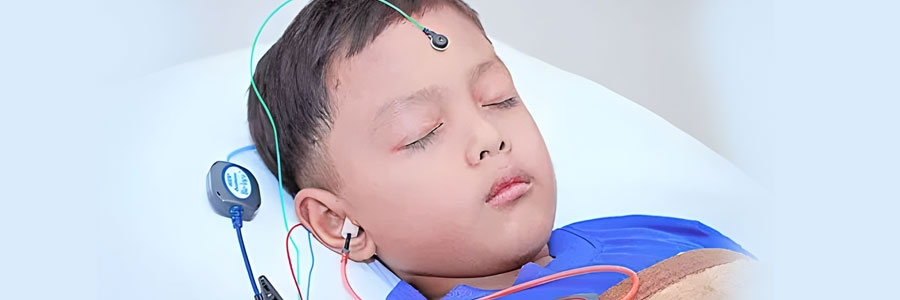
BERA can be done without the patient needing to do anything. Patients only need to lie down and preferably in a calm attitude or while sleeping. For children, this examination can be done in the wake, sleep, or in anesthesia (although rarely). Electrodes will be placed on the patient’s head and behind the ear during the BERA test procedure. When the examination is done, the patient will be heard various sounds through headphones. This examination measures changes in brain electrical activity (EEG) in the provision of acoustic stimuli. Abnormalities that occur in the transmission of signals when the sound is heard indicates hearing loss.
This examination has no risk of complications, is painless, and does not require special preparation for the BERA test.
Audiology Team
- Sagar Suryawanshi
ASLP
Clinical audiologist - Monika Choudhary
BASLP
Clinical Audiologist and Speech Therapist